Motibagh Zero Waste Plant
NBCC / Ministry of Urban Development
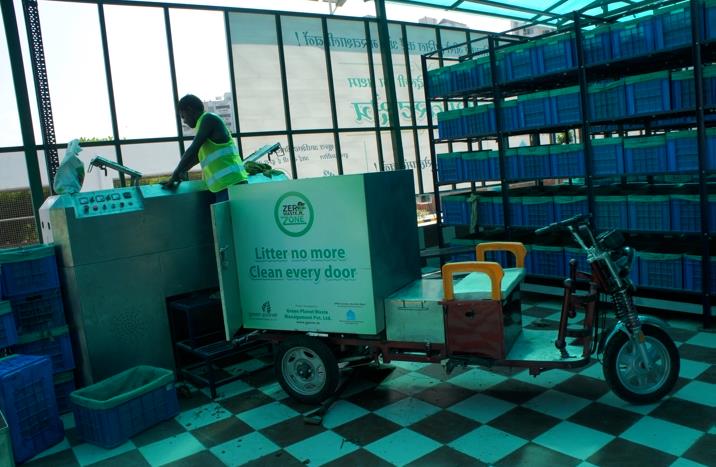
When GPWM established its pilot plant at the GPRA Complex, New Moti Bagh, decentralised zero-waste processing was a concept most municipalities considered impractical. Motibagh was built to settle the question: a site inside one of New Delhi's largest government residential complexes, separating waste at source and processing every fraction on-site — composting the wet stream, converting plastic to fuel, and channelling dry recyclables back into the material economy — instead of trucking mixed waste to a landfill.
Thirteen years later, the question is settled. The plant handles roughly 1.2 tonnes of waste every day: around 800 kg wet waste composted on-site, and a dry stream from which saleable material — plastic, paper, glass, metal — is recovered daily and routed to registered recyclers.
What makes Motibagh singular: it houses a plastic-to-fuel unit that has been in continuous operation for more than eight years, converting the complex's plastic waste into fuel. Very few decentralised facilities in India can claim a plastic-to-fuel unit with that operating record. It is GPWM's demonstration site — the place people visit when they want to see, not be told, that zero waste to landfill is an operating reality.
In October 2025, NDMC designated New Moti Bagh — the complex our operation serves — as one of its Anupam Colonies, recognising it for 100% source segregation and a fully circular waste system in which every stream is processed and reused on site, with dry waste sorted at an in-house materials recovery facility. It is the kind of recognition that only comes after years of operations quietly working.
One site, thirteen years, zero excuses.
Talk to the operators.
Tell us what you handle and where. We will tell you what is workable on the ground.